
Category: Books That Shape Leaders
-
Book 60: “The Art of Action” by Stephen Bungay
A strategy can look convincing and still leave people unsure what to do. Stephen Bungay’s The Art of Action examines why this happens—and how leaders can clarify priorities, check understanding and give people room to exercise judgment.
-
Book 59: “Managing in Turbulent Times” by Peter Drucker

Uncertainty is nothing new. Drucker’s book asks demanding questions about financial strength, misleading figures and the commitments that leave too little room for tomorrow.
-
Book 58: “Leadership Without Easy Answers” by Ronald A. Heifetz
Ronald Heifetz’s Leadership Without Easy Answers challenges the belief that leaders must always provide solutions. Real leadership often begins when familiar answers no longer work and people must learn their way forward together.
-
Book 57: “The Practice of Adaptive Leadership” by Ronald Heifetz, Alexander Grashow and Marty Linsky

Some problems cannot be solved by applying existing expertise. Reflecting on The Practice of Adaptive Leadership, I explore how leaders help people confront loss, accept responsibility and learn their way through uncertainty.
-
Book 56: “Only the Paranoid Survive” by Andrew S. Grove

Andrew S. Grove’s Only the Paranoid Survive explains why success can breed complacency—and how leaders can recognise strategic inflection points before it is too late.
-
Book 55: “Leading Change” by John P. Kotter
John Kotter’s Leading Change turns organisational transformation into a disciplined process. Its enduring lesson is simple: change requires urgency, vision, coalition, early wins and persistence until new behaviour becomes culture.
-
Book 54: “The Economics of Higher Purpose” by Robert E. Quinn and Anjan V. Thakor
Robert E. Quinn and Anjan V. Thakor show that authentic higher purpose is more than an inspiring statement. When purpose guides leadership decisions and connects people to a worthy contribution, it can strengthen commitment, innovation and economic performance.
-
Book 53: “The Second World War” by Winston S. Churchill
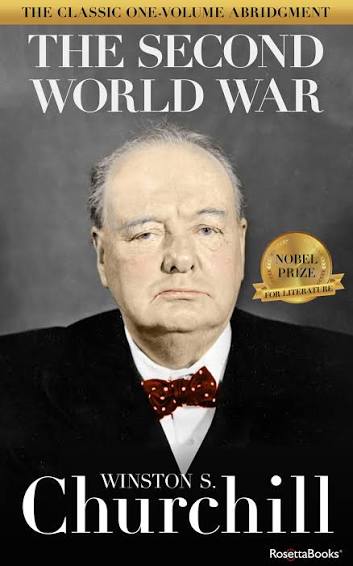
Winston Churchill’s The Second World War is more than a history of conflict. It is an extraordinary study of leadership under uncertainty, judgement, communication, coalition-building and responsibility.
-
Book 52: “The Servant as Leader” by Robert K. Greenleaf
Robert K. Greenleaf reversed the traditional idea of leadership: the servant comes first. His enduring question is not how many people follow us, but whether those we lead become wiser, freer, stronger and more capable because of our leadership.
-
Book 51: “Leadership” by James MacGregor Burns
James MacGregor Burns’s Leadership challenged the idea that leadership is simply power or position. Its lasting insight is that true leadership transforms both leaders and followers—and leaves people more capable than before.