
(What instant judgment gets right — and dangerously wrong)
“We make decisions very quickly, and we are seldom aware of how we make them.”
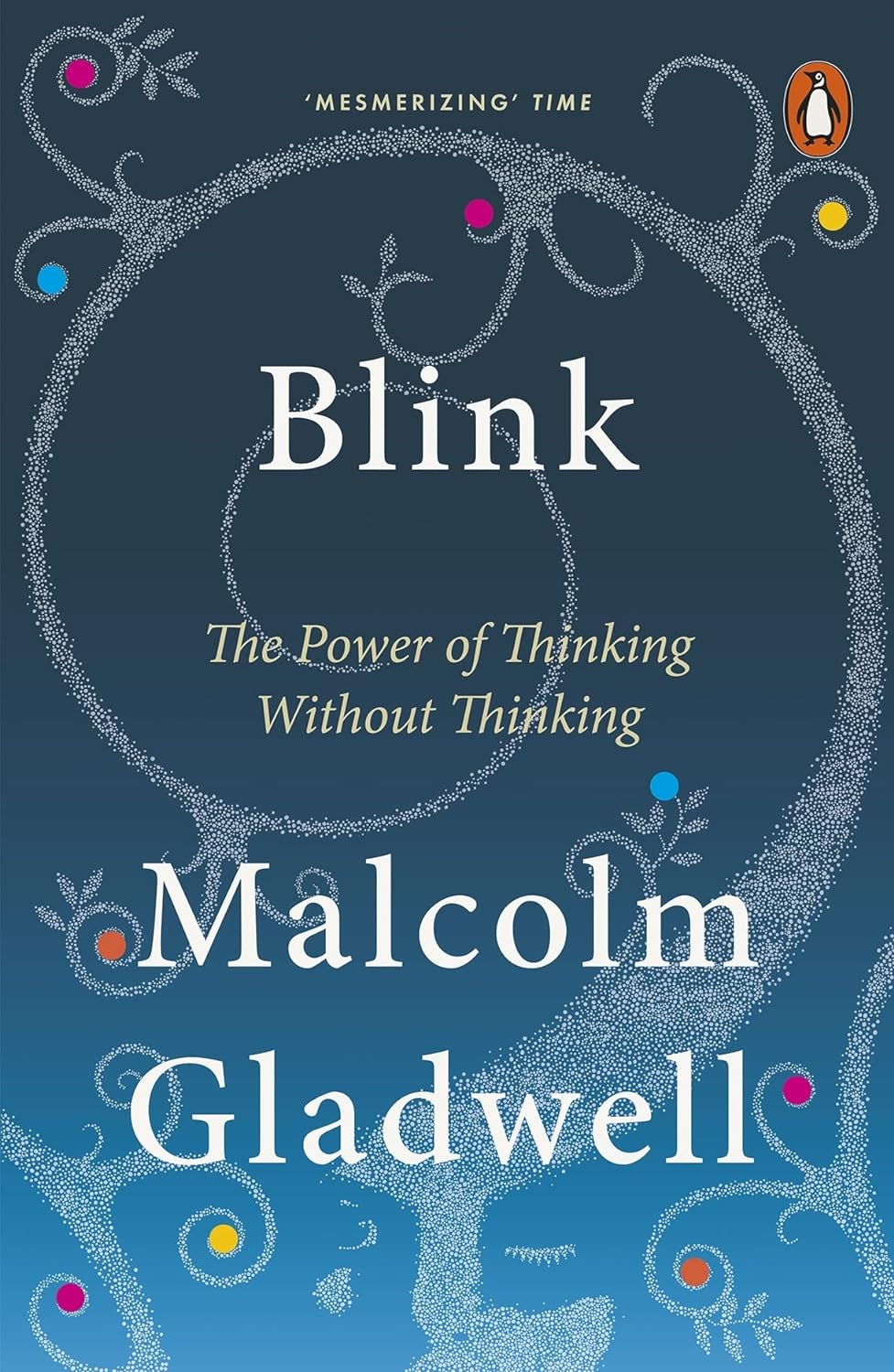
That is the unsettling and fascinating premise at the heart of Malcolm Gladwell’s “Blink”, a book about “choices that seem to be made in an instant” and about “thinking without thinking.”
In leadership, we celebrate careful analysis. We admire leaders who gather data, study reports, and weigh alternatives before acting. And rightly so. Many important decisions require patience and discipline.
But leadership does not always give us the luxury of time.
Sometimes, the moment demands a judgment before all the facts are in. A negotiation shifts unexpectedly. The candidate says all the right things, yet something feels wrong. A meeting appears orderly on the surface, but the atmosphere tells another story. In such moments, leaders often rely on something faster than deliberate reasoning: instinct.
Gladwell argues that this instinct is not necessarily irrational. Often, intelligence operates below the surface.
The Power of the First Glance
One of the central ideas in “Blink” is “thin-slicing,” which Gladwell describes as the mind’s ability to find patterns from very narrow slices of experience. He argues that “thin-slicing is not an exotic gift” but “a central part of what it means to be human.”
We are constantly making rapid judgments — about people, situations, risks, and opportunities — often before conscious analysis has fully begun.
This helps explain why experienced professionals sometimes know something before they can explain it. A firefighter senses danger before the signs are obvious. Before the tests confirm it, a doctor notices something unusual in a patient. A seasoned executive enters a room and immediately feels that the actual issue is not the agenda, but the tension no one is naming.
This is not magic. It is a compressed experience.
Over time, the mind absorbs patterns: tone of voice, hesitation, body language, inconsistencies, and subtle signals that rarely appear in formal reports. Experience teaches us what matters, and sometimes the unconscious mind recognizes it before the conscious mind catches up.
That is one of the most valuable insights in “Blink”: not all good judgment is slow.
Why Fast Thinking Can Help Leaders
There are moments in leadership when speed is not recklessness but necessity. A team in crisis does not need endless analysis disguised as rigor. Before resistance becomes explicit, a chairperson in a tense board discussion may need to sense where it is forming. A senior executive may need to decide, with incomplete information, whether a person is trustworthy, whether a deal is sound, or whether a strategy is unraveling.
In such moments, instinct can be useful — but only when one earns it.
Gladwell does not argue that every snap judgment is wise. He argues that some are. Fast thinking works best when deep exposure, disciplined observation, and repeated feedback build it. The more experience a leader has genuinely absorbed, the more likely that rapid cognition reflects insight rather than impulse. As Gladwell puts it, “thin-slicing is part of what makes the unconscious so dazzling.”
I have seen this in my life. There were meetings where the numbers seemed convincing, yet something in the room’s mood suggested the proposal was weaker than it appeared. Sometimes I trusted that impression and avoided a mistake. Sometimes I overruled it in the name of objectivity, only to discover later that the warning signs had been there all along — just not in spreadsheet form.
The Dark Side of Instinct
Yet “Blink” is not a hymn to intuition. It is also a warning.
The same mind that detects patterns quickly can also mislead us quickly. First impressions are shaped not only by experience, but by environment, habit, and bias. Gladwell notes that “our first impressions are generated by our experiences and our environment,” which means they are not fixed truths but conditioned responses.
This is where the book becomes especially important for leaders.
A leader may favor confidence over competence. Substance might be trusted less by a board than polish. A recruiter may reject a strong candidate for reasons that feel instinctive but are actually biased. A manager may misread silence as weakness or disagreement as disloyalty.
These errors are dangerous precisely because they feel so natural. The speed of the judgment gives it an illusion of certainty.
That is why we should respect instinct, but never worship it.
When to Trust the Blink — and When Not To
The real leadership lesson of “Blink” is not that fast thinking is better than slow thinking. It is that both have their place.
A good leader learns to ask two different questions.
The first is: “What is my instinct telling me?”
The second is: “Why is it telling me that?”
That second question matters enormously. It is the bridge between intuition and wisdom.
If a rapid judgment arises from years of experience, close observation, and tested pattern recognition, it may be valuable. If it arises from ego, fear, stereotypes, or impatience, it may be dangerous.
The more power a leader has, the more important this becomes. Senior leaders face fewer contradictions. Their first impressions are less likely to be challenged. Their instincts, right or wrong, can quickly become organizational decisions.
That is why leadership requires not just instinct, but examined instinct.
The best leaders know when to trust the first glance, and when to slow the process down. They know some situations reward fast recognition, while others demand reflection, dissent, and more evidence. They know that wisdom is not speed alone. It is a judgment about when speed is appropriate.
The Enduring Lesson
What makes “Blink” such a compelling book is that it forces us to take the unconscious mind seriously. It reminds us that some truths arrive in an instant — and so do some mistakes.
Leadership, then, is not a choice between intuition and analysis. It is the discipline of knowing when each one deserves the lead.
Sometimes the blink is wisdom.
Sometimes bias moves too fast to be noticed.
The task of a leader is to learn the difference.
If you’d like to explore the book yourself, you can find it here on Amazon.
As an Amazon Associate, I earn from qualifying purchases. This means that if you click on a link in this post and make a purchase, I may receive a small commission at no extra cost to you. Your support helps keep The Chairman’s Playbook going, and I’m grateful for it.
Leave a Reply