
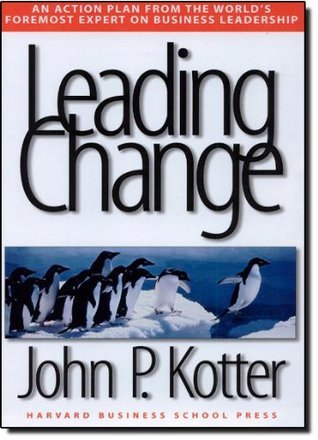
“Transformation is a process, not an event.”— John P. Kotter, Leading Change
When I became CEO of the Romanian Bank for Foreign Trade in 1990, the institution faced an unavoidable transformation. The institution had been created for a centrally planned economy and now had to become a modern commercial bank operating in an emerging market.
At the time, I had not read John P. Kotter’s “Leading Change” (published only in 1996). I acted largely by instinct: creating urgency, defining a direction, gathering people who believed in the transformation, removing obstacles and using early achievements to build confidence.
Only later, when I encountered Kotter’s work, did I recognise a structure behind some of those instincts.
That is one reason “Leading Change” remains so valuable. It turns the confusing and often painful experience of organisational transformation into a disciplined process that leaders can understand and apply.
Why Transformation So Often Fails
Most organisations approach change primarily as a problem of planning.
Senior leaders identify a challenge, approve a strategy, redesign the organisation and announce the new direction. They assume people will act accordingly because the decision makes sense, and the plan is detailed.
Kotter shows why this assumption is mistaken.
Organisations are human communities shaped by routines, interests, loyalties, professional identities, and deeply embedded beliefs about how things should be done. You can introduce a new organizational chart in a day. A new way of thinking may take years.
Change often fails not because the strategy is wrong, but because leaders underestimate the forces protecting the status quo.
Kotter’s Eight Steps
Kotter describes transformation as an eight-stage process:
- Establish a sense of urgency.
- Create a guiding coalition.
- Develop a vision and strategy.
- Communicate the change vision.
- Empower people to act.
- Generate short-term wins.
- Consolidate gains and produce further change.
- Anchor the novel approaches in the culture.
The model appears simple. Its difficulty lies in respecting the sequence and giving each stage sufficient attention.
Leaders are often impatient. Once they understand the problem, they assume everyone else sees it too. They think they’ve communicated the vision once it’s announced. Once the first results appear, they conclude that the transformation has succeeded.
Kotter warns against all three illusions.
Urgency Is Not Panic
Transformation begins when enough people recognize that remaining where they are carries greater risks than moving into the unknown.
This is what Kotter calls a sense of urgency. It does not mean creating panic or exaggerating danger. Fear may produce immediate movement, but it rarely sustains intelligent commitment.
True urgency combines realism with possibility. People must understand both why the existing situation cannot continue and why their efforts can make a meaningful difference.
Complacency is especially dangerous because it disguises vulnerability. An organisation may still be profitable, respected, or dominant while the foundations of its success are already weakening. Leaders must make emerging threats visible before decline becomes undeniable — and before action becomes desperate.
No Leader Changes an Organisation Alone
Formal authority may initiate change, but it cannot generate the knowledge, trust, and commitment required to carry it through. Kotter therefore places the guiding coalition near the beginning of the process.
Such a coalition is not simply the executive committee. It must include people with authority, expertise, credibility, relationships, and the capacity to lead. Its members must share more than an intellectual agreement that change is desirable; they must assume responsibility for making it happen.
This is also where leadership becomes uncomfortable. Some people will remain unconvinced. Others may accept the language of change while quietly defending the old order.
Leaders should listen to principled disagreement because dissent may reveal weaknesses in the strategy. But they must distinguish constructive challenge from persistent obstruction. Participation cannot mean allowing every vested interest to veto the future.
Vision Gives Change Meaning
Urgency may dislodge an organisation from the present, but only vision can give it direction.
Kotter argues no element is more important than “a sensible vision.” It answers three essential questions: Where are we going? Why is that future worth pursuing? What must we do differently to reach it?
Without such clarity, transformation fragments into disconnected projects. Departments pursue separate priorities, employees receive conflicting signals, and activity is mistaken for progress.
Communicating the vision repeatedly and consistently is essential. One presentation is not communication. People judge the seriousness of change through leaders’ decisions: what they fund, whom they promote, what behaviour they reward, and what contradictions they tolerate.
As Kotter observes, nothing undermines change more than behaviour “inconsistent with the verbal communication.”
Early Success — and Its Danger
Large transformations take time. People therefore need evidence that their efforts are producing results.
Short-term wins provide that evidence. They weaken cynicism, reward those taking risks, and strengthen the credibility of the change coalition. They turn a distant promise into something visible.
Yet early success can be deceptive. Leaders may celebrate returns and relax before the new practices have become resilient. The organisation then returns to its former habits.
A project’s success or a target’s achievement does not secure change. It becomes secure only when new behaviours are reflected in systems, appointments, incentives and everyday expectations.
Culture Changes Last
Leaders often speak of changing culture as though it were the first step: define new values, communicate them, and expect behaviour to follow.
Kotter reverses this logic.
Culture changes after people have worked differently for long enough to discover that the fresh approach produces better results. Repeated behaviour creates shared experience; shared experience becomes accepted practice; accepted practice eventually becomes “the way we do things around here.”
This is why transformation cannot be achieved by slogans. Only when institutions reflect values do they become real.
From Instinct to Discipline
People should not treat Kotter’s eight steps as a mechanical checklist. Real transformation is rarely perfectly linear, and leaders may need to revisit earlier stages as circumstances evolve.
The deeper lesson of “Leading Change” is that transformation requires urgency without panic, direction without rigidity, participation without paralysis, early success without premature celebration, and persistence long after the excitement of the beginning has faded.
Instinct may sometimes point a leader in the right direction. Kotter helps us understand why those instincts work — and how they can become a discipline that others can learn.
If you’re interested in exploring this book further, you can find it available here on Amazon.
As an Amazon Associate, I earn commissions from qualifying purchases linked in this post without additional costs to readers – thank you for supporting the endeavors behind ‘The Chairman’s Playbook’!
Leave a Reply