
History Written from the Center of the Storm
“In War: Resolution. In Defeat: Defiance. In Victory: Magnanimity. In Peace: Goodwill.”
— Winston S. Churchill
Some books are about leadership; others make it visible page by page.
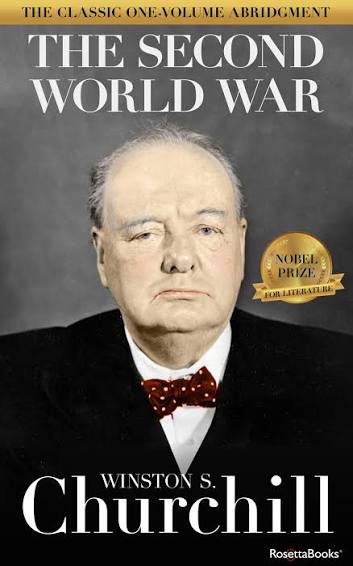
Winston Churchill’s six-volume The Second World War” belongs emphatically to the second category.
Published between 1948 and 1954, the work is enormous in scale. It stretches from the unresolved consequences of the First World War through the rise of Hitler, the collapse of France, Britain’s solitary resistance, the entry of the Soviet Union and the United States into the conflict, and finally the defeat of Germany and Japan.
But it is not simply a history of the war.
It is the account of a man who helped make the history he was describing.
That is both its great strength and its unavoidable limitation.
The view from the center
Churchill was not an observer looking backward from the safety of an archive. He had warned repeatedly about German rearmament during the 1930s. He became Prime Minister in May 1940, as Western Europe was collapsing. He participated in the war’s great strategic decisions and negotiated directly with Roosevelt and Stalin.
We therefore see events from inside the machinery of power.
Cabinet discussions, military assessments, telegrams, memoranda and conversations with other leaders appear throughout the work. Churchill reconstructs not only what happened, but what leaders knew — or thought they knew — when they had to decide.
That distinction matters.
History often creates an illusion of inevitability. Once we know the outcome, earlier choices appear clearer than they really were.
Churchill reminds us that leaders live forward, not backward.
In 1940, no one knew Britain would survive. No one knew when America would enter the war. No one knew whether Hitler would invade Britain, defeat the Soviet Union, or consolidate control of Europe.
Leadership occurred amidst uncertainty.
The power of seeing early
One of the most striking lessons comes before Churchill becomes Prime Minister.
Political isolation marked much of the 1930s for him. Yet he continued warning that Germany was rearming and that Britain was dangerously unprepared.
The lesson is not that Churchill was always right. He certainly was not.
It is that leadership sometimes begins with the willingness to see something before an institution is ready to acknowledge it.
Organizations and governments are vulnerable to uncomfortable information. People easily rationalize, postpone, or dismiss evidence that contradicts accepted assumptions.
The person who identifies the threat may therefore seem unreasonable long before they appear prescient.
Seeing reality early can be a lonely form of leadership.
Words as instruments of action
People remember Churchill as much for his language as for his decisions.
That is sometimes treated as rhetoric surrounding leadership. His wartime experience suggests something stronger: language itself can be an instrument of leadership.
After Dunkirk, Britain had lost equipment, allies, and strategic position. What Churchill could still influence was how the British people understood their situation.
He did not promise an easy victory. He acknowledged the danger while giving it meaning.
That balance is extraordinarily difficult.
Optimism without reality becomes propaganda. Reality without hope becomes paralysis.
Leadership requires both.
Churchill understood that people can endure enormous hardship when they believe sacrifice has purpose. His speeches did not remove the danger. They changed the psychological conditions under which people confronted it.
Decision under imperfect knowledge
The six volumes are also a magnificent study in judgment.
Churchill constantly moves between political, military, diplomatic, and economic considerations. Decisions that seem obvious in isolation become complicated when viewed as parts of a larger system.
Should Britain defend Greece?
How much equipment could they send to the Soviet Union?
When should the Allies invade France?
How should commanders allocate limited shipping, aircraft, and troops among competing theatres?
There was rarely a perfect answer.
This is one of the deepest leadership lessons in the work.
Senior leadership is not primarily the ability to solve problems with known answers. It is the responsibility to act when information is incomplete, consequences are uncertain, and several legitimate objectives compete.
Judgment therefore matters more than certainty.
Leadership is also coalition
The heroic image of Churchill standing alone often overshadows another important theme in 1940.
Britain could resist alone for a time. It could not win alone.
Victory required an extraordinary coalition: Britain, the United States, the Soviet Union, the Commonwealth, and many other nations whose interests, political systems, and strategic priorities were far from identical.
Churchill had to persuade, negotiate, compromise, and occasionally accept decisions he disliked.
That is leadership, too.
We celebrate decisiveness, but great collective achievements often depend upon something less dramatic: maintaining cooperation among people who disagree.
Leadership is not simply making others follow you. Sometimes it is keeping sufficiently different actors together long enough to accomplish something none could achieve separately.
Churchill writing Churchill
We should nevertheless read the books critically.
Churchill was writing history, but also defending his record and shaping how posterity would understand him. His access to documents was exceptional, his prose formidable, and his ability to frame events unmatched.
The narrator is therefore never neutral.
That does not diminish the book. It makes them more interesting.
We are reading history, memoir, argument, and self-portrait at once.
Perhaps we should read great political memoirs this way: not as the final judgment on events, but as testimony from someone who carried responsibility within them.
What remains?
Churchill ended the work with four principles:
In War: Resolution.
In Defeat: Defiance.
In Victory: Magnanimity.
In Peace: Goodwill.
They contain something larger than military strategy.
Leadership requires different virtues at distinct moments.
There are times to resist. Times to decide. Difficult times to get through. Times to compromise. And after victory, times to resist the temptation to humiliate those who have lost.
I have always found the most valuable leadership books to be those that remind us that people exercise leadership not in ideal circumstances but amid incomplete information, competing pressures, and consequences that people cannot fully know.
Churchill’s “The Second World War” does precisely that.
It is not a manual for leadership.
It is something better: six volumes showing what leadership looks like when history leaves no simple choices.
If you’re interested in exploring this book further, you can find it available here on Amazon.
As an Amazon Associate, I earn commissions from qualifying purchases linked in this post without additional costs to readers – thank you for supporting the endeavors behind ‘The Chairman’s Playbook’!
Leave a Reply