
Power Is Not a Dirty Word
“Power is not a property of individuals, but a relationship among people.”
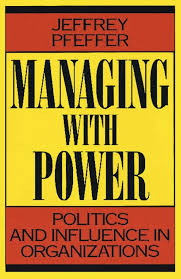
Most leadership books celebrate vision, values, and inspiration. Jeffrey Pfeffer’s “Managing with Power: Politics and Influence in Organizations” tackles a subject many leaders prefer to avoid: power.
Pfeffer argues organizations cannot be understood without understanding power. As he writes:
“To understand organizations, one must understand organizational power and politics.”
Many people view power as something undesirable or even unethical. Pfeffer disagrees. Power itself is neither good nor bad. It is simply the capacity to influence outcomes.
Like money, technology, or authority, its value depends entirely on how it is used
The mistake is not in pursuing power. The mistake is in pretending it does not exist.
The Illusion of Meritocracy
One of the most important lessons from the book is that competence alone rarely determines success.
Most organizations like to believe they are meritocracies. We assume the best ideas win, the hardest workers advance, and the most capable people naturally rise to positions of influence.
Reality is more complicated.
Pfeffer observes: “Performance is important, but it is not sufficient to explain who succeeds.”
Organizations are social systems, not engineering systems. People compete for resources, attention, promotions, and influence. Human beings, not algorithms, decide.
As a result, visibility often matters as much as ability.
Relationships often matter as much as expertise.
Perception often matters as much as reality.
This may seem unfair, but denying it won’t change anything.
Early in my career, I believed that excellent work would automatically attract recognition. Experience taught me otherwise. Good work matters enormously, but people must also understand its value. Influence requires both competence and communication.
Why Power Matters
Pfeffer defines power in practical terms.
Power is the ability to get things done.
It is the capacity to influence decisions, allocate resources, and shape outcomes.
Formal authority can contribute to power, but authority and power are not identical.
As Pfeffer notes: “One of the major sources of power is the control of resources on which others depend.”
This insight explains why some individuals wield enormous influence despite modest titles, while others possess impressive titles but little real impact.
People gain influence when they control critical information, possess unique expertise, maintain important relationships, or contribute to activities central to organizational success.
In my experience, the most influential people in organizations are often not the most senior. They are the people whom others seek out when problems must be solved.
The Reality of Organizational Politics
Politics is perhaps the most misunderstood word in management.
For many people, politics means manipulation, self-interest, and backroom deals.
Pfeffer offers a more neutral perspective.
Politics emerges naturally whenever individuals or groups have different interests and limited resources.
In other words, politics is inevitable.
The question is not whether politics exists.
The question is whether we understand it.
Pfeffer writes: “Politics and political behavior arise from the existence of divergent interests.”
Leaders often say they want to avoid politics altogether. Unfortunately, this is rarely possible.
Building support for a new strategy is politics.
Securing resources for an important project is politics.
Creating alignment across competing departments is politics.
The most effective leaders are not those who avoid organizational politics. They are those who practice it transparently and ethically.
Building Sources of Influence
One of the book’s most practical contributions is its discussion of how individuals generate influence.
Pfeffer identifies several important sources of power:
- Expertise
- Control of resources
- Access to information
- Strong networks
- Reputation and credibility
- Association with critical organizational activities
He emphasizes that power flows toward relevance.
People become influential when others need what they provide.
As Pfeffer observes: “Individuals and subunits gain power through their ability to cope with uncertainty.”
This insight is relevant in today’s rapidly changing world.
The leaders who can navigate complexity, interpret uncertainty, and provide clarity often become indispensable.
Their influence grows not because they demand it, but because others depend on it.
Why Good Leaders Study Power
Many leaders fear that studying power will somehow compromise their integrity.
Pfeffer argues the opposite.
Understanding power means understanding reality.
Ignoring power does not make organizations more ethical.
It merely makes leaders less effective.
One of the book’s most memorable observations is:
“If power is a social reality, then understanding it is a necessity.”
A finance-savvy leader can allocate capital more effectively.
A leader who understands strategy can allocate resources more effectively.
A leader who understands power can mobilize people more effectively.
The goal is not manipulation.
The goal is effectiveness.
Without influence, even the best ideas remain unrealized.
The Chairman’s Reflection
What struck me most about “Managing with Power” is its realism.
Many leadership books describe organizations as they should be.
Pfeffer describes organizations as they are.
Some readers find this uncomfortable.
I find it useful.
Throughout my career, I have seen brilliant ideas fail because their advocates lacked influence. I have also seen average ideas succeed because their sponsors built strong coalitions and secured broad support.
The lesson is not that influence matters more than competence.
The lesson is that competence, and influence must work together.
Leadership is not merely about having the right answer.
It is about creating the conditions for implementing the right answer.
Jeffrey Pfeffer reminds us that power is not the enemy of leadership.
Used responsibly, it is one of leadership’s essential tools.
Because in the end, intentions do not measure leadership.
Outcomes measure it.
And outcomes require influence.
If you’re interested in exploring this book further, you can find it available here on Amazon.
As an Amazon Associate, I earn commissions from qualifying purchases linked in this post without additional costs to readers – thank you for supporting the endeavors behind ‘The Chairman’s Playbook’!
Leave a Reply