
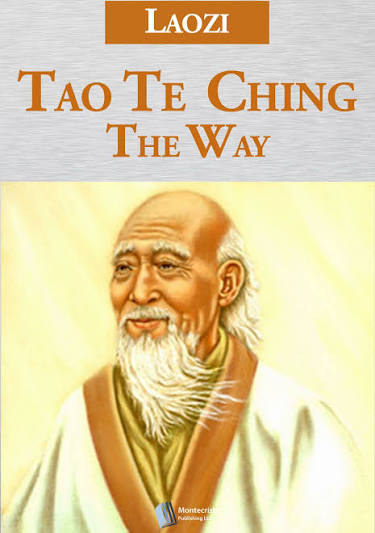
Leading Without Forcing
“The highest good is like water. Water gives life to the ten thousand things and does not strive.”
Over 2,500 years ago, a Chinese sage known as Laozi wrote a brief text of just over 5,000 Chinese characters. Despite its brevity, the “Tao Te Ching” became one of the most influential books in human history.
Unlike many leadership books, it offers no formulas, no strategic frameworks, and no seven-step plans. Instead, it presents a paradoxical view of leadership: the strongest leader is often the least visible, the wisest leader speaks the least, and the most effective action is sometimes inaction.
At first glance, these ideas may seem impractical in a world obsessed with speed, ambition, and achievement. Yet, the older I become, the more I find that Laozi’s insights often describe how leadership actually works.
The Danger of Forcing Outcomes
Modern leaders frequently receive rewards for their actions. We must intervene, decide, push, accelerate, and control.
Laozi warns against this instinct.
“Those who grasp lose. Those who force fail.”
His central concept is Wu Wei, often translated as “non-action.” This does not mean passivity or laziness. Rather, it means acting in harmony with circumstances instead of fighting against them.
Many leadership failures occur because leaders try to impose solutions before understanding the system they are trying to change. They confuse activity with effectiveness.
I have seen organizations launch transformation programs before understanding the culture they hoped to transform. I have seen executives introduce new structures before identifying the real problem. Many times, the effort created more resistance than progress.
Laozi reminds us that we should not attack every obstacle. Sometimes the wiser approach is to observe, understand, and then move with the natural flow of events.
The Strength of Humility
One of the recurring themes in the “Tao Te Ching” is humility.
“All streams flow to the sea because it is lower than they are. Humility gives it its power.”
Some people in business often misunderstand humility as a sign of weakness. Yet, the best leaders I have known were remarkably humble.
They listened more than they spoke.
They asked questions instead of displaying expertise.
They were willing to change their minds when new information emerged.
Their confidence came not from proving they were right but from finding the right answer.
Humility creates learning. Arrogance creates blindness.
A leader who believes he already knows everything stops growing. A leader who remains curious continues to evolve.
In a world changing as rapidly as ours, humility may be one of the most important leadership capabilities.
The Invisible Leader
Perhaps the most famous leadership passage in the “Tao Te Ching” is this:
“The best leaders are those the people hardly know exist. When the work is done, the people say, ‘We did it ourselves.’”
This idea runs directly against the modern cult of leadership, which often celebrates visibility, charisma, and personal branding.
Laozi suggests that great leadership is not about being noticed. It is about creating conditions that allow others to succeed.
Early in my career, I believed leaders had to provide most of the answers. Experience taught me otherwise.
The strongest teams emerge when people feel ownership of the solution. When every answer comes from the leader, initiative declines. When people contribute to building the answer, commitment grows.
The most effective leaders often become architects of environments rather than heroes of events.
Their success becomes visible through others.
Simplicity as a Competitive Advantage
The “Tao Te Ching” consistently favors simplicity over complexity.
“To attain knowledge, add things every day. To attain wisdom, remove things every day.”
Organizations naturally accumulate complexity. New procedures accumulate. Additional reports are required. More approvals are introduced. Layers multiply.
Few leaders intentionally create bureaucracy. Yet, bureaucracy emerges naturally when no one challenges complexity.
One of the most valuable leadership questions is remarkably simple:
“What can we stop doing?”
Many times, progress comes not from adding another initiative but from eliminating distractions.
The discipline of simplification requires courage because removing something often feels riskier than adding something. Yet clarity, focus, and speed frequently emerge from subtraction rather than expansion.
Power of Balance
The Taoist worldview emphasizes balance rather than extremes.
Strength and softness.
Action and reflection.
Confidence and humility.
Ambition and contentment.
Modern leadership culture often celebrates one side of these pairs while neglecting the other. We praise decisiveness but overlook reflection. We admire confidence but underestimate humility.
Laozi reminds us that wisdom lies in balancing opposing forces rather than choosing one side over the other permanently.
Leadership is rarely about finding a perfect answer.
It is usually about managing tensions.
The ability to navigate competing priorities without becoming trapped by either extreme may be one of the most valuable leadership skills.
A Book for a Noisy World
The “Tao Te Ching” can feel frustrating to readers seeking direct advice. Its language is poetic, ambiguous, and often paradoxical.
Yet, perhaps that is precisely why it has endured.
Most books tell us what to think.
Laozi encourages us to think for ourselves.
In an age of constant notifications, endless opinions, and relentless pressure to act, his message feels surprisingly modern.
Slow down.
Observe carefully.
Lead with humility.
Create space for others to grow.
Do not mistake motion for progress.
The “Tao Te Ching” reminds us that leadership is not always about exerting more force. Often, it is about developing the wisdom to know when less is more.
Over two millennia after it was written, that lesson remains as relevant as ever.
If you’re interested in exploring this book further, you can find it available here on Amazon.
As an Amazon Associate, I earn commissions from qualifying purchases linked in this post without additional costs to readers – thank you for supporting the endeavors behind ‘The Chairman’s Playbook’!
Leave a Reply