
Leadership Lessons on Luck, Skill, and Storytelling
“You attribute your successes to skills, but your failures to randomness.”
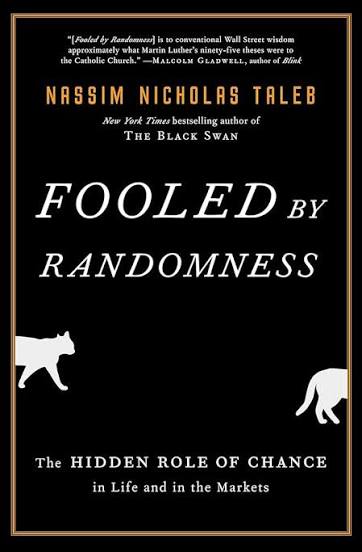
That line from Nassim Nicholas Taleb’s “Fooled by Randomness” belongs in every executive notebook. In uncertain environments — markets, strategy, regulation, and technology shifts — leaders don’t just decide. They also make stories about those decisions. Taleb warns that the story usually flatters us.
The book’s leadership value is practical: it helps you separate process from outcome, so you don’t confuse a lucky win with repeatable skill — or punish competent people for an unlucky quarter.
What it means to be “fooled” in leadership
Randomness is not chaos. Much of it includes hidden variation: the part of reality we cannot see, measure, or control. When many variables influence results, it becomes hard to isolate what you actually contributed.
Taleb puts it plainly: “The degree of randomness in such an activity and our ability to isolate the contribution of the individual determine the visibility of the skills content.”
Leaders operate in three conditions that amplify randomness:
- Delayed feedback: You decide today, and results show up months later.
- Multiple causes: Outcomes depend on competitors, regulation, macroeconomic factors, talent, and timing.
- Small samples: A few big deals, a few significant hires, a few “bets.”
Precisely the environment where “success” can be partly luck, and “failure” can be partly bad timing.
Taleb puts it bluntly: “We are quick to forget that luck plays a huge role in life.”
Add ego to the mix, and you get systematic overconfidence — exactly what Taleb points to when he notes: “80 to 90% of people think that they are above the average (and the median) in many things.” If almost everyone believes they’re above average, then many leaders will attribute success to skill even when the environment did much of the work.
The antidote is to start with base rates — how often initiatives like yours succeed in the real world — and only then adjust for your specific edge.
Silent evidence: the winners we see, the graveyard we don’t
We over-trust winners because we don’t see the cemetery. We study visible triumphs and ignore invisible failures — the people and firms who used the same “rules” and didn’t survive long enough to be interviewed.
In organizations, silent evidence shows up when we:
- over-reward a spectacular bet without measuring the risk taken,
- copy a playbook because it worked once and call it “best practice.”
Taleb’s message is not “ignore success.” It’s “don’t let success blind you.” A helpful habit: whenever you admire a success story, ask, “What would I need to know about the failures to judge this properly?” If you can’t answer, you are learning the wrong lesson.
Narrative fallacy: why your post-mortem analysis contains bias
The most dangerous meeting is the post-mortem, where everyone speaks with certainty. We look back, connect the dots, and create a clean chain of causality — then we feel we “understand” what happened. Yet Taleb reminds us: “It is very difficult to isolate a single cause when there are plenty around.”
This narrative impulse reduces anxiety, but it also creates overconfidence. Overconfidence is how organizations build fragility: they turn a story into policy, then get surprised when conditions change.
A simple safeguard is linguistic: treat explanations as hypotheses, not verdicts. Replace “This happened because…” with“One plausible contributor is…”. Even better, ask teams to list two alternative histories: what minor changes would have flipped the outcome?
Incentives: why organizations keep rewarding luck
Taleb is sharpest on incentives. Many systems reward people for results even when randomness influences those results. He writes: “But top management is only paid on result — no matter the process.”
That sentence explains a lot of bad corporate behavior. When rewards follow outcome only, people learn to manage appearances, chase volatility that looks good in the short term, and hide downside until it becomes unavoidable.
I’ve seen this in risk discussions where a “great quarter” silences sober questions. The applause becomes a drug, and the organization confuses confidence with competence. Taleb’s remedy is structural, not moral: measure what you can, design incentives carefully, and never let a single headline result define a person’s skill.
A Taleb-compatible approach is to evaluate risk-adjusted performance and decision quality. Ask not only “Did it work?”but also “What did it cost in risk, optionality, and fragility?” A modest win achieved safely is often more valuable than a dazzling win that loads hidden downside into the future.
The internal struggle: knowing noise is easier than feeling it
One of Taleb’s most human lines is this: “If my brain can tell the difference between noise and signal, my heart cannot.”
Leaders live within that tension. Intellectually, you can accept randomness. Emotionally, you still feel pride after wins and shame after losses — and your team still wants certainty. So, the goal is not emotional perfection. It is better habits that reduce self-deception.
Taleb even admits the difficulty: “I have personally failed in achieving a general insulation from randomness, but I have managed a few tricks.”
Five “Taleb tricks” for decision-ready leadership
- Separate outcomes from decisions in reviews.
Evaluate the quality of the decision based on the information available at the time, and assess the quality of the outcome afterward. - Use ranges, not point forecasts.
Require best/base/worst cases with probabilities. Single-number certainty is usually theater. - Write assumptions and revisit them.
Treat assumptions like inventory: list them, test them, retire them. - Reward early honesty about uncertainty.
Make it safe to say, “I don’t know yet.” Late certainty is often expensive. - Build asymmetry into bets.
Taleb uses his trading language to explain strategy: “In other words, I aim at profiting from the rare event, with my asymmetric bets.”
The closing question
Taleb leaves you with a choice: protect your ego, or protect your organization. If you protect your ego, you’ll keep explaining wins as skill and losses as bad luck. If you protect your organization, you’ll treat outcomes as noisy evidence — and build a culture that learns in uncertainty.
That is the leadership upgrade “Fooled by Randomness” offers: less storytelling, more robustness, and the courage to be accurate when certainty is the easiest lie.
If you’d like to explore the book yourself, you can find it here on Amazon.
As an Amazon Associate, I earn from qualifying purchases. This means that if you click on a link in this post and make a purchase, I may receive a small commission, at no extra cost to you. Your support helps keep The Chairman’s Playbook going, and I’m grateful for it.
Leave a Reply