
Leadership When the Future Is Uncharted
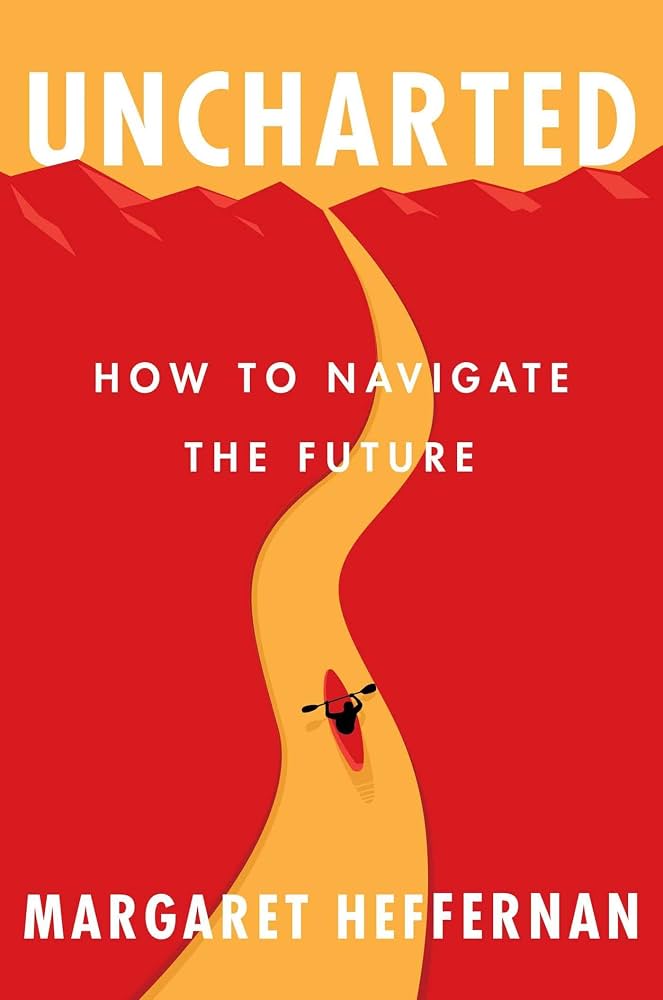
“The future isn’t perfectly knowable and never has been.” — Margaret Heffernan, Uncharted: How to Navigate the Future (2020)
A five-year plan can be strangely reassuring. Revenue grows, margins improve, and the business arrives more or less where its leaders said it would. Even when we know how much could change, a convincing set of numbers makes the future feel manageable.
There are good reasons for wanting that reassurance. People have money and careers at stake. They expect those in charge to have thought ahead. The difficulty begins when admitting uncertainty becomes embarrassing, and assumptions gradually acquire the authority of facts.
In “Uncharted,” Margaret Heffernan examines our appetite for prediction and the abilities we neglect while waiting for a reliable account of what comes next. For anyone concerned with leadership under uncertainty, it is an uncomfortable book in useful ways. It raises doubts about practices that can look perfectly responsible from inside a boardroom.
The Comfort of a Convincing Forecast
Heffernan describes forecasts as “incomplete, ideological and self-interested”. That may sound harsh. Yet anyone who has examined an investment proposal closely knows how much depends on the assumptions selected before the calculations begin.
A team keen to enter a new market will find evidence of opportunity. Colleagues who expect to carry the operational burden may notice costs the proposal barely mentions. Both can act in good faith. Their positions affect what they see.
At UniCredit Romania, the financial crisis caused us to abandon its plan to open 300 branches. That experience stays with me because it exposes a difficulty familiar to many leaders: a strategy may make sense under conditions that don’t last long enough to succeed.
We still need forecasts. I would be uneasy about a business that stopped making them. But I would want the discussion to spend more time on what could invalidate the assumptions, and on how soon we would acknowledge that. Once a plan has become associated with somebody’s reputation, revising it can become unnecessarily difficult.
Preparation Has a Cost
Heffernan’s emphasis on preparedness offers a practical way forward. We can improve our ability to respond without knowing precisely what will happen. An alternative supplier, for example, may prove useful across several kinds of disruption. So may an employee who has had time to learn a colleague’s work.
The awkward part is paying for these things before you need them.
Spare capacity looks expensive when nothing goes wrong. A manager can usually show an immediate saving by removing it; the benefit of keeping it is harder to budget for. That imbalance makes organizations vulnerable to cuts whose full consequences emerge much later.
Picture a department where employees have assigned every hour in advance. They have to either displace existing work or extend hours to accommodate an unexpected task. Neither will appear in the report announcing that the department has become more efficient.
No simple formula tells you how much reserve is enough. Leaders must make that judgment, even though they face the uncomfortable possibility that they may never use some preparation. Uncertainty does not relieve them of the obligation to choose.
Learning Before Committing
The book’s discussion of experimentation is especially useful here. Heffernan argues for wider participation, recognizing that “everyone can contribute.” This means making room for knowledge that rarely reaches the people approving a proposal.
Before introducing a new service, a company could test it with a small group of customers and involve the employees who will handle complaints. Their observations might alter the design, or reveal that the service should not proceed at all.
Much depends on whether that second outcome is genuinely acceptable.
A trial conducted after senior management has effectively committed itself is unlikely to produce much honest learning. People notice what happens to inconvenient findings. If explaining a disappointing result becomes an exercise in self-defense, the next report will probably be more reassuring and less useful.
Leaders often ask for initiative. Accepting evidence that weakens their own preferred idea gives that invitation some credibility.
Trust Needs an Earlier Start
Heffernan quotes Richard Hatchett, discussing epidemic preparedness: “Don’t exchange business cards in a crisis.” It is a wonderfully practical observation. By the time people urgently need to cooperate, much of the work that makes cooperation possible should already have happened.
Knowing someone’s name is a modest beginning. Confidence develops as people work through disagreements, see who follows through, and learn to interpret one another’s concerns. That takes longer than a networking event.
The same applies within an organization. Colleagues who normally withhold information or defend departmental interests will struggle to work openly under pressure. Declaring an emergency does not erase years of habit.
This makes everyday conduct consequential. A manager’s response to bad news on an ordinary Tuesday helps determine whether the next warning arrives promptly or is softened beyond recognition. By the time the board hears about a serious problem, the organization may have already spent weeks teaching people how little to say.
Giving People a Direction
I would not take “Uncharted” as permission to be vague. People need decisions, and a leader cannot keep every option open indefinitely. At some point, someone must commit resources, even when the evidence is incomplete.
What seems reasonable to me is to explain that judgment plainly: why this course makes sense, where the doubts remain, and what would cause us to reconsider. There is nothing weak about doing so. It gives colleagues enough understanding to exercise judgment themselves.
A forecast will eventually meet circumstances its authors did not anticipate. I would want to know whether the people around the table were ready to notice, speak honestly, and change their minds. That would give me more confidence than a forecast whose precision disguises how much remains uncertain.
If you’re interested in exploring this book further, you can find it available here on Amazon.
As an Amazon Associate, I earn commissions from qualifying purchases linked in this post without additional costs to readers – thank you for supporting the endeavors behind ‘The Chairman’s Playbook’
Leave a Reply