
Why Careers Are Built Through Action, Not Planning
“We learn who we are in practice, not in theory.”
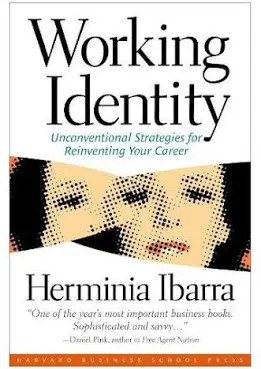
Few career books challenge conventional thinking as directly as “Working Identity” by Herminia Ibarra. Most career advice tells us to look inward first — discover our passion, define our purpose, understand who we truly are, and then build a career around that certainty.
Ibarra argues almost the opposite.
Her insight is that identity is not discovered fully formed through introspection alone. It is built through action, experimentation, relationships, and repeated reinvention.
That idea matters enormously in leadership.
Many leaders wait too long before making important transitions because they believe clarity must come first. They want certainty before taking risks. But careers — and leadership identities — rarely develop in such a linear way.
As Ibarra writes: “Action changes thinking. Before we know exactly what direction to take, we need to act.”
That sentence captures something profoundly true about growth. In life, movement often creates clarity more effectively than reflection alone.
The Trap of Waiting for Certainty
Highly intelligent and capable people are often especially vulnerable to paralysis through analysis. They search endlessly for the perfect answer:
“What is my true calling?”
“What career fits me best?”
“What if I make the wrong choice?”
But according to Herminia Ibarra, identity transitions rarely happen through sudden revelations. They emerge gradually through “small wins” and practical experiments.
This is deeply relevant to leadership development.
The transition from specialist to manager, manager to senior executive, or senior executive to chairperson cannot be purely intellectual. Every important transition requires becoming someone slightly different from who we were before.
And that process is uncomfortable.
As Ibarra observes: “The only way to know whether a possible self is possible is to try it out.”
Leadership growth works exactly this way.
Many future leaders initially feel unprepared for the responsibilities that come with leadership. Confidence often follows action rather than preceding it. We step into larger roles before fully believing we belong there.
I experienced this firsthand during Romania’s transition years, when I unexpectedly moved into senior leadership roles at a relatively young age. Overnight, my role changed fundamentally. I was no longer simply part of a team of professionals; I had to make decisions in the face of uncertainty, assume institutional responsibility, and influence others during volatile times.
Much of the learning happened while doing the job itself.
That is precisely the kind of transition Ibarra describes.
Possible Selves
One of the most powerful ideas in “Working Identity” is the notion of “possible selves.”
We all contain multiple unrealized versions of who we could become. But those identities remain abstract unless tested in real life.
Some people discover a talent for teaching only after mentoring others. Others uncover leadership ability only after being forced into difficult situations. Some people realize late in life that their initial career choices never fully used their deepest strengths.
As Ibarra writes: “People grow and change in interaction with the world.”
That sentence may sound simple, but it challenges a widespread assumption: the belief that identity exists independently of experience.
In reality, identity evolves continuously.
And leadership often emerges through exposure to challenges rather than through long-term planning.
Networks Shape Careers
Another major lesson from the book is that career transformation depends heavily on relationships.
People often rely too heavily on familiar networks — colleagues and friends who know them only in their current role or identity. Those relationships can unintentionally reinforce old versions of ourselves.
To evolve, we need exposure to different conversations, industries, perspectives, and communities.
As Ibarra writes: “New competencies and points of view come from current or future-oriented relationships, not from past-oriented relationships.”
This explains why international exposure, diverse teams, and cross-functional experiences matter so much in leadership development.
New relationships expand not only our knowledge but also our imagination about who we could become.
In many ways, careers are shaped by social factors. We learn about ourselves partly through others’ reactions, opportunities, and expectations.
Action Before Clarity
Perhaps the most important insight in “Working Identity” is that clarity usually follows action rather than preceding it.
Most people assume the sequence should be:
- Understand yourself completely.
- Then act.
But life usually works in reverse:
- Experiment.
- Learn.
- Adjust.
- Gradually gain clarity.
The same is true in leadership.
People make many of life’s most important decisions without complete confidence. Waiting indefinitely for certainty often becomes another form of fear.
That is why small experiments matter so much:
- taking on a new project,
- joining a board,
- teaching,
- mentoring,
- writing publicly,
- leading outside one’s expertise,
- working internationally,
- exploring a different field.
These experiences reshape identity incrementally.
As Ibarra wisely notes: “We don’t find ourselves in a blinding flash of insight, and neither do we change overnight.”
Growth is iterative.
Leadership is iterative.
Reinvention as a Leadership Skill
One reason I admire Herminia Ibarra is that she presents career development not as climbing a fixed ladder, but as an ongoing process of reinvention.
That perspective feels increasingly relevant today.
Technology transforms industries. AI reshapes professions. Skills become obsolete faster than before. Entire business models disappear within a decade.
In such a world, perhaps the greatest professional advantage is not certainty, but adaptability.
The leaders who thrive are rarely those who cling rigidly to old identities. They are the ones willing to evolve before circumstances force them to.
And reinvention rarely begins with confidence.
It begins with curiosity, experimentation, and the willingness to feel unfinished temporarily.
That may be the deepest lesson of “Working Identity”:
We do not build our future selves through reflection alone.
We build them through action.
If you’re interested in exploring this book further, you can find it available here on Amazon.
As an Amazon Associate, I earn commissions from qualifying purchases linked in this post without additional costs to readers – thank you for supporting the endeavors behind ‘The Chairman’s Playbook’!
Leave a Reply