
“The best leaders don’t have the answers. They have the right questions.” — Liz Wiseman
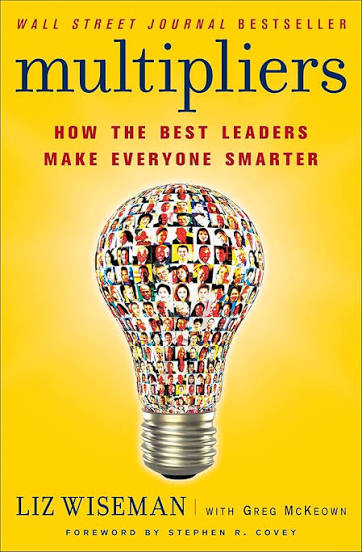
Some leadership books sharpen your skills. Others refine your understanding. Very few reshape the way you see people. “Multipliers” by Liz Wiseman and Greg McKeown is one of those rare books.
Its central claim is transformative but straightforward: some leaders drain intelligence from their teams, while others amplify it.
And what separates them is not authority, experience, or brilliance — but a deeply human choice about how they see the surrounding people.
After decades of leading banks, boards, and teams across different industries, I can attest to this truth: leadership is less about what you know and more about who you enable. In my career, I have met both Multipliers and Diminishers, and the difference between them is the difference between vibrant, innovative organizations and stagnant, exhausted ones.
Wiseman writes: “Leaders who are Multipliers believe people are smart and will figure things out.”
Diminishers don’t.
Diminishers vs. Multipliers: Two Paths, Two Futures
Wiseman and McKeown describe two types of leaders:
Diminishers
Diminishers aren’t always tyrants. In fact, many have good intentions. But they unintentionally suppress the capability of their teams because they:
- Dominate discussions
- Provide all the answers
- Micromanage decisions
- Assume they are the smartest in the room
The book puts it starkly: “Diminishers get less than half of their people’s true capability.”
I’ve seen this throughout my career: knowledgeable individuals whose very brilliance became a cage for others. Their teams became careful, cautious, quiet. People waited for instructions rather than thinking independently. The organization slowly shrank to the limits of one person’s mind.
Multipliers
In contrast, Multipliers create an entirely distinct atmosphere. They:
- Invite contributions
- Stretch people beyond their comfort zone
- Ask questions that unlock thinking
- Build capacity, not dependence
Wiseman summarizes them with clarity: “Multipliers get 2.1 times more intelligence from their people.”
In authentic leadership, those numbers make the difference between an organization that scales and one that collapses under its own bottlenecks.
The Five Disciplines of a Multiplier
Wiseman identifies five behaviors that convert ordinary leaders into Multipliers. Each of them is a discipline — something you cultivate deliberately.
1. The Talent Magnet
Multipliers attract talent not because of charisma, but because people feel they grow around them.
They look for:
- curiosity
- hunger
- character
- raw potential
Not merely credentials.
One line in the book is worth framing: “Multipliers don’t look for geniuses; they look for genius makers.”
This resonates deeply with my journey. Early in my career, a few leaders placed significant responsibilities on me long before I felt ready. They saw capacity, not limitations. They trusted potential, not titles. That trust became fuel.
2. The Liberator
Liberators create an environment of:
- psychological safety
- high expectations
- openness
- meaningful challenge
Wiseman writes: “Liberators create space where people can do their best thinking — and they insist on it.”
This is crucial: they are not “soft.”
They combine safety with accountability.
One of my mentors once told me, “If people fear you, they hide the truth from you.” Multipliers remove the fear but raise the bar. They expect excellence because they believe in your capacity.
3. The Challenger
Diminishers overload people with tasks; Multipliers challenge them with vision.
The Challenger says:
“I believe you can do something bigger than you think.”
They:
- reframe opportunities
- ask hard questions
- demand deep thinking
- stretch people into growth
A quote that captures this perfectly: “Multipliers seed opportunities and then expect people to make them bloom.”
The Challenger does not overwhelm. They empower.
4. The Debate Maker
This is one of the most misunderstood leadership habits. Multipliers know that the best ideas emerge from rigorous thinking, not from hierarchy.
They:
- invite multiple perspectives
- ask clarifying questions
- create structured debate
- push for evidence, logic, and clarity
The book states: “Multipliers make quality decisions by engaging everyone in the debate.”
Debate is not conflict. Debate is respect — it signals that people’s views matter. It builds ownership because the decision is forged collectively.
5. The Investor
This is the highest form of leadership maturity.
Investors:
- hand over real ownership
- give people the metaphorical keys
- step back without disappearing
- hold people accountable for outcomes
Wiseman describes them beautifully: “Investors give responsibility and then provide the support people need to be successful.”
Leadership at this level requires trust — not naïve trust, but intentional trust.
And the results are extraordinary: capability compounds.
Why Multipliers Matter Today More Than Ever
We live in a world of:
- complexity
- rapid change
- talent mobility
- fragile engagement
- hybrid work
- cognitive overload
In such an environment, the old model of leadership — omniscient, top-down, command-and-control — is too slow and too narrow.
Modern leadership is not about having more intelligence.
It is about unlocking more intelligence.
As Wiseman notes: “The genius of the Multiplier is that they make people smarter — so everyone wins.”
This is not a “nice-to-have.”
It is a competitive advantage.
Companies led by Multipliers:
- innovate faster
- retain talent longer
- adapt more fluidly
- create internal leaders
- build succession naturally
In contrast, Diminishers create organizational fragility.
When everything depends on one mind, one voice, or one ego, everything becomes slow, brittle, and dependent.
My Leadership Takeaway: Legacy Is Measured in Expanded Capability
After reading Wiseman’s research and reflecting on my own experience, I am convinced of this simple truth:
The ultimate measure of leadership is how much better and more capable people become because you were there.
Multipliers practice generative leadership.
They build leaders, not followers; create thinkers, not recipients; develop capacity, not dependency.
Wiseman writes: “Multipliers are leaders who use their intelligence to amplify the smarts and capabilities of the people around them.”
This is the kind of leadership our organizations — and the world — desperately need.
Because leadership, in its highest form, is not addition.
It is multiplication.
If you’d like to explore the book yourself, you can find it here on Amazon.
As an Amazon Associate, I earn from qualifying purchases. This means that if you click on a link in this post and make a purchase, I may receive a small commission, at no extra cost to you. Your support helps keep The Chairman’s Playbook going, and I’m grateful for it.
Leave a Reply