
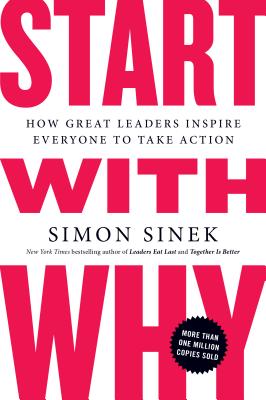
Simon Sinek’s “Start With Why” is a thought-provoking read that may initially appear to be another leadership guide filled with various frameworks and anecdotes. However, the conclusion prompts a more profound inquiry: What motivates us in our endeavors?
The Golden Circle: Why → How → What
Sinek posits that, while most organizations and leaders understand what they do, and some can articulate how they achieve it, the most exceptional ones – those that inspire movements and foster enduring loyalty – begin with the why. He refers to this concept as the Golden Circle:
Why – the underlying purpose, cause, or belief that motivates all actions.
How – the processes or values that realize the why.
What – are the products, services, or outcomes that result from the why?
As Sinek succinctly states, “People don’t buy what you do; they buy why you do it.” This phrase encapsulates the essence of the entire book.
Too frequently, leaders start with the what and expand outward. Sinek contends that visionaries commence with why. Consider Apple: they do not merely sell computers or smartphones. Their core belief is about challenging the status quo and fostering creativity. The how (design and simplicity) and the what (products) naturally stem from this foundational belief.
The Importance of Sinek’s Concept for Leaders
The core message is straightforward yet impactful: customers and employees are loyal not to products or salaries but to causes and beliefs.
Sinek reminds us that “There are only two ways to influence human behavior: you can manipulate it, or you can inspire it.” While manipulation may yield short-term results, inspiration cultivates lasting loyalty.
As a corporate leader, your role extends beyond merely generating profits; it involves providing individuals with a reason to believe in a purpose worth supporting. Without a definitive why, strategies can become aimless, cultures deteriorate, and motivation wanes.
Your why should serve as the unifying call for your organization. It transcends personal ambition and offers individuals a larger cause to connect with. Leaders inspire when they make the organization’s purpose clear and consistent.
Understanding Our Individual Why
Our personal why pertains to meaning. It addresses questions such as: Why am I pursuing this career? Why am I motivated about this mission? Why is my work significant to me? It’s easy to be drawn into the pursuit of titles, salaries, or external validation – the what. True fulfillment arises when our why aligns with how we spend our time.
When individuals understand their why, they bring enthusiasm and resilience to their work. Similarly, leaders foster environments where others can flourish when comprehending their why. These perspectives are interconnected: an inspired leader attracts equally motivated individuals, collectively cultivating an enduring culture.
As Sinek articulates, “Working hard for something we don’t care about is called stress. Working hard for something we love is called passion.”
This is where The Chairman’s Playbook intersects: passion is not merely about energy, but about direction. As discussed in Play 02: Discover What You Do Better Than Most, passion is the fourth element of vocation. Sinek emphasizes that understanding your why ignites passion, while awareness of your strengths completes the equation. Together, they form a vocation that is worth pursuing with intention.
My Personal Takeaways
Engaging with “Start with Why” was not just an intellectual exercise, but a reflective lens for me. Here are the key lessons I gleaned:
- I often led with the what. Metrics, goals, and numbers feel secure, but authentic leadership necessitates first articulating belief. Clearly define the why, simplifying it until it feels irrefutable.
- Why fosters loyalty. Compliance can be purchased easily, but commitment must be inspired. Hire individuals who believe in the why, not just those with the requisite skills. Those who share the why are more than just employees; they are believers.
- Leaders need to be compelling storytellers. A why buried in a presentation does not resonate with people. It must be communicated, reiterated, and embodied daily.
- Why does transcend individual leaders. Results may fade with leadership changes, but a compelling why sustains an organization long after a leader departs.
One of Sinek’s quotes resonated with me: “If you hire people just because they can do a job, they’ll work for your money. But if you hire people who believe what you believe, they’ll work for you with blood, sweat, and tears.” This shifted my perspective on hiring, mentoring, and team development.
Final Thoughts
Sinek revisits the well-known parable of the three bricklayers during the reconstruction of St. Paul’s Cathedral in 1671 by architect Sir Christopher Wren. When questioned about their work, one mason said, “I’m laying bricks.” Another replied, “I’m building a wall.” The third, however, smiled and responded, “I’m building a cathedral.” The variance lay not in the tasks performed, but in the why behind them. The first two viewed their work as a job, while the third recognized it as a vocation. Sinek’s retelling simplifies this to two masons, yet the underlying message remains unchanged.
I mention this to illustrate a point. The concept of ‘why‘ is as ancient as philosophical inquiry, from Aristotle’s telos to Nietzsche’s insights to Drucker’s management principles. Sinek has modernized this notion.
What distinguishes Sinek is his ability to distill this timeless and philosophical concept into a straightforward, practical framework for leadership: the Golden Circle. His brilliance lies not in inventing the ‘why’, but in rendering it accessible to managers, entrepreneurs, and leaders across various fields.
For me, this book was a reset; a reminder that, as a leader, my foremost responsibility is not solely to achieve results, but to ensure that those around me comprehend why we strive, why it is significant, and why they are integral to the journey.
As Sinek notes, “When people are financially invested, they want a return. When people are emotionally invested, they want to contribute.”
If you’d like to explore the book yourself, you can find it here on Amazon.
Disclosure: As an Amazon Associate, I earn from qualifying purchases. This means that if you click on a link in this post and make a purchase, I may receive a small commission — at no extra cost to you. Your support helps keep The Chairman’s Playbook going, and I’m grateful for it.
Leave a Reply