
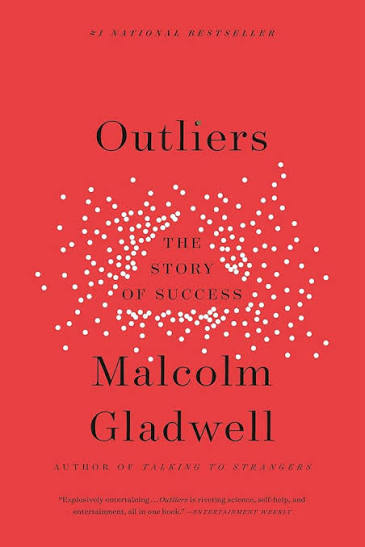
Today, I am inaugurating a weekly series exploring leadership books that have shaped my perspective. From timeless classics to modern insights, each commentary distills key lessons and takeaways leaders can apply today. Each week, I will comment on a book, related more or less to the subject of that week’s Tuesday post. Here is the first book.
The Success Equation: What Malcolm Gladwell’s “Outliers” Teaches Us
Introduction
We love stories of the lone genius or bootstrapping entrepreneur. But Malcolm Gladwell’s “Outliers: The Story of Success” challenges that myth. Success, he argues, isn’t only about hard work. It’s also about where you’re from, when you were born, and the opportunities you encounter.
In his view “People don’t rise from nothing. We do owe a little bit to parentage and patronage.”
Why Some People Get Ahead
Gladwell opens with a quirky fact: most Canadian hockey stars are born in January, February, or March. Because the age cutoff is January 1, kids born earlier are slightly older, bigger, and stronger. That advantage leads to better coaching and more playtime, which snowballs over time. It’s the same with Bill Gates getting rare early access to a computer in the 1970s, or The Beatles playing marathon sets in Hamburg before fame. Success isn’t random. It is built on small, compounding advantages.
Gladwell says, “Success is not a random act. It is a product of both a predictable and standing set of circumstances, and an opportunity.”
The 10,000-Hour Rule
Gladwell’s most quoted idea is that mastery requires about 10,000 hours of practice. But not everyone can get those hours. Gates had computers, and the Beatles had nightly gigs. Effort matters only when paired with access.
“Training is not something you do once you’re good. It’s what you do that makes you good.”
The Role of Timing
When you’re born can matter as much as what you’re born with. Many tech pioneers — Gates, Jobs, Schmidt — were born in the mid-1950s, perfectly positioned to ride the personal computing wave. They were young enough to adapt, and old enough to lead.
Right place. Right time. Right preparation.
Culture Shapes Capability
Culture influences how we think, learn, and lead.
- Airline crashes: Korean Air once had a poor safety record, rooted in cultural hierarchies that silenced junior pilots. When those norms shifted, safety improved.
- Math performance: Students in Asia often excel because rice farming traditions cultivate patience and persistence, cultural values that carry into education.
According to Gladwell, “Cultural legacies are powerful forces. They’re long-living and deeply rooted.”
What Talent Alone Can’t Do
Gladwell contrasts two men: Chris Langan, a genius with an IQ higher than Einstein’s, and Robert Oppenheimer, who led the Manhattan Project. Langan lacked the social capital to thrive; Oppenheimer had it. Intelligence alone wasn’t enough.
This challenged my belief that raw talent inevitably rises. Outliers remind us that we succeed because of the systems and people who support us.
Rethinking What We Call “Fair”
If success is about more than effort, how should leaders respond? Gladwell suggests:
- Level the playing field with earlier and greater access to opportunity.
- Rethink systems that reward early bloomers while sidelining late starters.
- Invest in communities with mentorship and resources that narrow the gap between potential and performance.
Takeaways for Leaders
- Instead of asking “Who worked the hardest?”, ask “Who set the stage for success?”
- Build systems that reward practice and persistence.
- Create opportunities, not just seize them.
- Be the person who opens doors.
- Redefine success as a collective outcome, not just an individual triumph.
My Reflection
When I first read “Outliers”, it resonated with lessons I had lived but never named. My leadership roles came not just from effort, but also from timing and people who believed in me. That doesn’t lessen achievement. It sharpens appreciation and clarifies the obligation to open doors for others.
Final Thoughts: The Real Story of Success
As a leadership and growth writer, “Outliers” reshaped my view of success. It deepened my gratitude for the opportunities I’ve had and my responsibility to create them for others.
Success isn’t just about finding one’s vocation or increasing one’s potential. It’s also about guidance. It’s not only what you do; it’s also the space you’re given to become.
In future posts, I will discuss opportunities, timing, luck, and other related subjects. Until then, stay tuned for the following Tuesday’s post about ‘why finding your vocation is the first element of success’.
If you’d like to explore the book yourself, you can find it here on Amazon.
Disclosure: As an Amazon Associate, I earn from qualifying purchases. This means that if you click on a link in this post and make a purchase, I may receive a small commission — at no extra cost to you. Your support helps keep The Chairman’s Playbook going, and I’m grateful for it.


Leave a Reply