
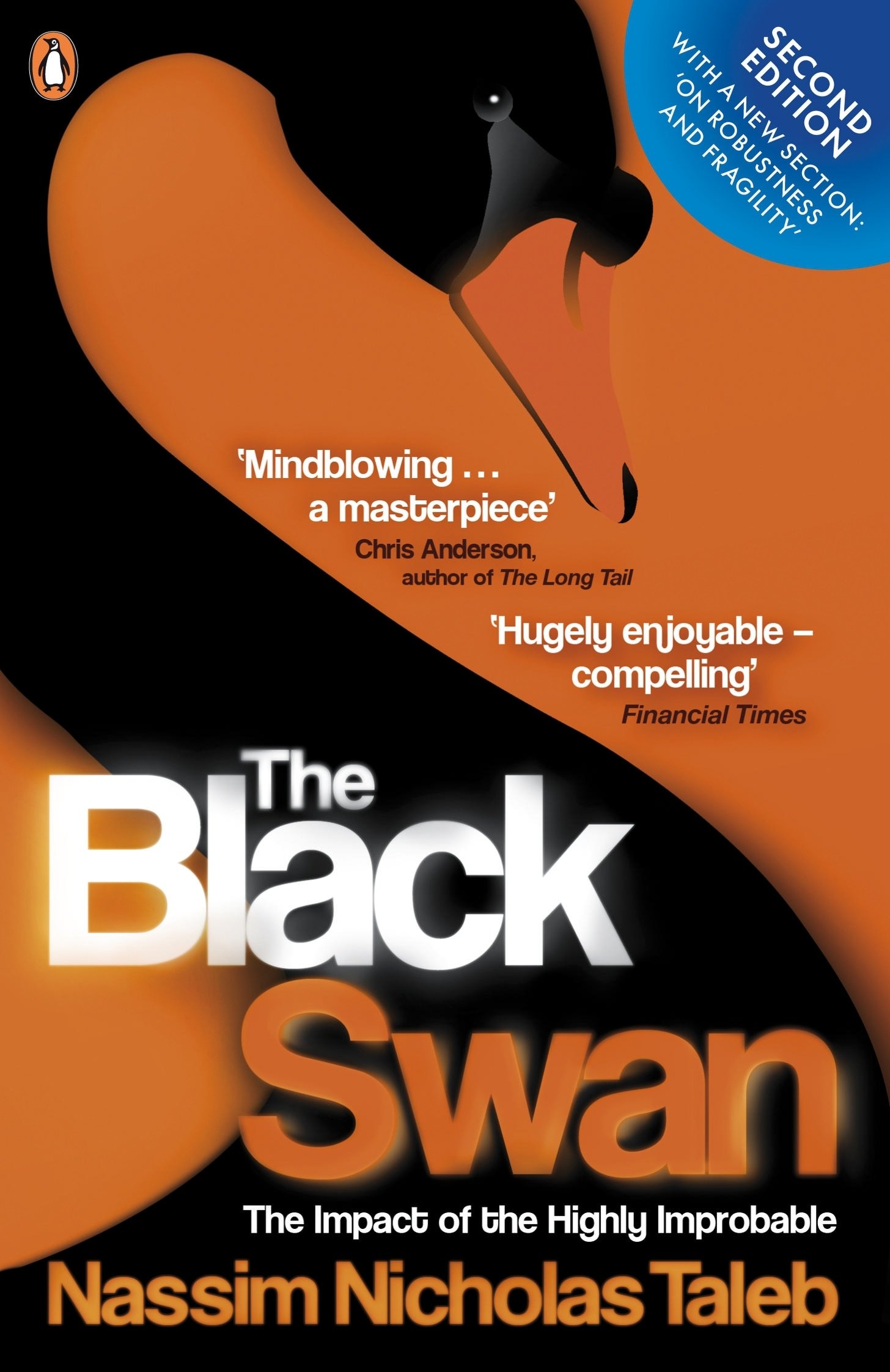
Why Leaders Must Learn to Respect the Unpredictable
“History is written by surprises.”
If that line makes you slightly uncomfortable, good. That discomfort is precisely the point of Nassim Nicholas Taleb’s “The Black Swan” — and it’s why the book still matters for leaders who believe they are “prepared.”
Taleb’s central idea is easy to state but difficult to practice: what is significant influences the world more than what is probable. We plan for the probable and get blindsided by the impactful. Taleb defines a “Black Swan” as an event that defies our usual expectations, has an extreme impact, and appears predictable only in retrospect.
Leadership is where this matters most — because routine does not test leadership. It is tested by rupture.
The leadership illusion: competence in calm times
In stable periods, it’s easy to confuse good management with authentic leadership. Forecasts look tidy. Strategy decks feel coherent. KPIs behave. And the organization believes the world is controllable.
But the real question is this: “Are we building an organization that performs well only when the world behaves — or one that can survive when the world refuses to behave?”
Taleb argues we are often victims of our own stories. We take messy reality and compress it into a neat narrative — what he calls the narrative fallacy. In boardrooms, this shows up as retrospective confidence.
- “Of course, that competitor won — we saw it coming.”
- “It was obvious the market would turn.”
- “The culture problem was always there.”
If it had always been obvious, why didn’t we act earlier?
A leader’s job is not to produce the most elegant story. It is to build the most resilient system.
The danger of “knowing”
One of Taleb’s most valuable contributions is his attack on overconfidence — especially the kind that hides behind credentials, models, and polished language.
In complex environments, confidence is often an indicator of ignorance. The more complicated the system, the more dangerous it is to speak with certainty.
That does not mean leaders should be indecisive. It means leaders should be humble about their predictions and serious about their preparation.
Try this as a personal diagnostic:
- When I present a plan, do I treat uncertainty as a footnote — or as the main character?
- Do I reward people for being right — or for being robust when they’re wrong?
- Do I build strategies that require everything to go right, or a plan that can survive when something goes wrong?
Black Swans don’t only happen “out there”
Most people hear “Black Swan” and think of global crises: market crashes, pandemics, wars, and technological shocks.
But for a leader, Black Swans also happen at a human scale:
- A key executive unexpectedly resigns.
- A trusted partner fails.
- A regulatory change rewrites your business model.
- A single reputational incident derails years of work.
- A hidden operational weakness becomes a public failure.
These are not exotic. They are common. What’s rare is how quickly they happen — and how large their consequences can become.
What Taleb suggests instead of prediction: optionality and robustness
Taleb doesn’t tell leaders to stop thinking. He tells them to stop worshipping forecasts.
A practical way to read The Black Swan is as a handbook for building “upside with protection.” Two ideas stand out.
1) Build robustness before you chase optimization
Optimization is fragile. It squeezes out slack, redundancy, and buffers. It looks efficient — until it breaks.
Robustness looks boring:
- extra liquidity
- extra capacity
- second-source suppliers
- simple rules in crisis
- conservative leverage
- a culture that escalates bad news fast
But boring is underrated. “Efficient” systems often fail dramatically. Robust systems endure quietly.
2) Create optionality
Optionality means having choices when the environment changes. It is the opposite of being trapped inside one perfect plan.
Leaders build optionality by:
- investing in people who can adapt (not just specialists who execute)
- keeping strategic partnerships warm
- running small experiments that can scale
- maintaining financial flexibility
- avoiding irreversible commitments when uncertainty is high
The goal is not to predict the future. The goal is to respond to multiple futures.
The hidden leadership skill: refusing the narrative
In my experience, organizations don’t fail only because the world changes. They fail because they keep telling themselves the old story, even after it has become false.
Taleb is a difficult writer at times — provocative, even abrasive — but his provocation has a leadership purpose: to shake us out of complacency.
The hardest sentence for a leader to say is not “I was wrong.”
It’s: “I don’t know — and we must design accordingly.”
That sentence, spoken with calm authority, is a mark of maturity.
A Black Swan mindset for everyday leadership
You don’t need a crisis to practice this.
Here are five habits that translate Taleb into daily leadership:
- Treat forecasts as opinions, not truth.
Ask: “What would make this forecast wrong?” - Reward early bad news.
Make it safe for people to surface weak signals. - Stress-test the organization.
Run “what breaks first?” scenarios — people, cash, operations, reputation. - Avoid fragile heroics.
If your success depends on a few indispensable individuals, you don’t have strength — you have luck. - Keep room to maneuver.
Optionality is a strategic asset. Don’t trade it away for short-term neatness.
Closing thought: the leader’s real promise
The promise of leadership is not “I can predict what happens.”
The promise of leadership is: “Whatever happens, we will not be surprised into helplessness.”
That is what The Black Swan asks of us: not paranoia, but preparedness; not cynicism, but realism; not perfect planning, but resilient design.
And if we take Taleb seriously, we may discover an unexpected relief: we don’t have to pretend certainty. We have to build strength.
If you’d like to explore the book yourself, you can find it here on Amazon.
As an Amazon Associate, I earn from qualifying purchases. This means that if you click on a link in this post and make a purchase, I may receive a small commission, at no extra cost to you. Your support helps keep The Chairman’s Playbook going, and I’m grateful for it.
Leave a Reply